 blog
How to Find Top Rated Condo Inspectors in Edmonton
Last Updated: October 30, 2026
Quick Summary
Top rated condo inspectors in Edmonton combine verified credentials, condo-specific knowledge, and plain-English reports. Look for a Certified Master Inspector with E&O and general liability insurance, confirmed common-area scope, thermal imaging, and same-day reporting. Executive Home Inspections has inspected properties since 2008 and holds a 4.9 rating across 93 reviews.
- Ask which association certified the inspector and verify membership in the directory yourself.
- Request a certificate of insurance for errors-and-omissions and general liability coverage.
- Confirm whether common areas like parkades and mechanical rooms are included in scope.
- A standard visual inspection cannot open walls, test the reserve fund, or review financial documents.
- Executive Home Inspections offers same-day reports and more than 18 years of experience.
Table of Contents
- What Sets Top Rated Condo Inspectors in Edmonton Apart
- What Does a Condo Inspection Include?
- Condo Inspection Cost: What Affects the Price
- How Long Does a Condo Inspection Take?
- Questions to Ask a Home Inspector Before Booking
- Book Your Condo Inspection with Executive Home Inspections
- Frequently Asked Questions
What Sets Top Rated Condo Inspectors in Edmonton Apart
Finding top rated condo inspectors comes down to three things: verified credentials, condo-specific knowledge, and a report you can actually understand. The best inspectors hold recognized professional credentials, carry proper insurance, and understand the difference between inspecting a detached house and inspecting a unit inside a shared building.
That matters more than most buyers realize.
At Executive Home Inspections, we have inspected properties across the area since 2008. Our team is led by a Certified Master Inspector.
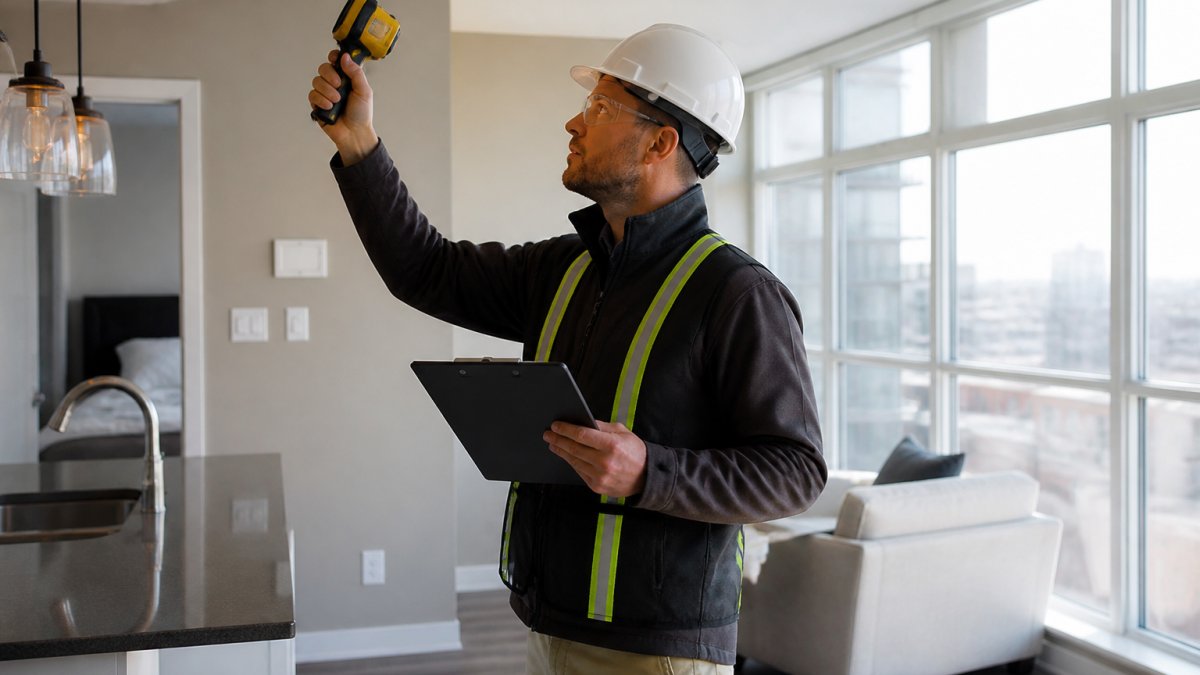
What separates a strong condo inspector from an average one?
- Certification you can verify. Ask which association certified them and check the member directory yourself.
- Condo-specific scope. Ask whether common areas are included, not just the inside of your unit.
- Same-day reporting. Waiting three days for a report can cost you the deal.
- Plain-English findings. A report that ranks issues by severity, not a long PDF of raw photos.
- Thermal imaging. Moisture intrusion and insulation gaps can hide behind finished walls.
How to Verify Credentials and Insurance Before You Book
A claim of certification means little until you confirm it. Use this checklist to separate a qualified professional from a name in a search result:
- Confirm the certifying body. Ask which association certified the inspector and check the member directory yourself. A legitimate member will be listed and in good standing.
- Ask for proof of errors-and-omissions (E&O) coverage. This professional liability insurance responds if the inspector misses something material. Ask for a certificate of insurance, not a verbal yes.
- Ask for proof of general liability insurance. This covers damage to the property during the inspection. Confirm it is current.
- Confirm condo experience, not just home experience. Ask how many condo units the inspector has inspected in the past year and whether common areas are in scope.
- Ask what training backs the certification. Look for ongoing education in building science, moisture intrusion, and condo-specific systems, not a one-time course.
- Request a sample report. A useful report ranks findings by severity, includes photos, and explains what is urgent versus cosmetic.
- Confirm the inspection standard followed. Ask which standards of practice the inspector works to and what the report excludes.
What a Condo-Specific Comparison Should Show
Most recommendation lists stop at star ratings. A more useful comparison weighs condo experience, credentials, report turnaround, sample report availability, service area, and verified review counts side by side. A provider with a strong overall rating but little condo experience may still miss common-area warning signs that matter to you as an owner.
The common mistake buyers make is booking whoever answers the phone first. A cheap inspection that misses a failing window seal or a leaking bathroom fan duct costs far more later.
What Does a Condo Inspection Include?
A condo inspection typically covers the interior of your unit plus the building components that directly affect it. Buyers should confirm with the inspector exactly which shared elements are in scope before booking.
Condo inspection scope typically includes:
- Interior walls, ceilings, and floors for cracks, water staining, or settlement
- Plumbing fixtures, supply lines, and drains within the unit
- Electrical panel, outlets, GFCI protection, and wiring visible at accessible points
- Heating, ventilation, and cooling equipment serving the unit
- Windows, balcony doors, and balcony surfaces
- Common area condition, where included in scope
- Signs of moisture intrusion, where thermal imaging is included
What it does not include is just as important. A standard visual inspection cannot open walls, test the reserve fund, or review the building's financial documents.
Watch out: buyers often assume the building's common elements are someone else's problem. Special assessments for roof replacement or parkade membrane repair land on owners, and visible warning signs are worth raising with your inspector early.
Condo Inspection Cost: What Affects the Price
Condo inspection pricing depends on unit size, age, building complexity, common-area access, and travel distance. There is no single flat rate, and any inspector quoting a firm number before seeing the property is guessing.
Pricing depends on unit size, building age, common-area access, and travel distance, so the total can vary between properties. For current pricing on your specific unit, check our website or request a quote.
Book Your Inspection Online Now →
| Factor | Why It Matters | Typical Effect on Price |
|---|---|---|
| Square footage | Larger units take longer to inspect | Base range scales with size |
| Building age | Older systems need closer scrutiny | Adds time for mechanical, electrical, plumbing |
| Common area access | Parkade, roof, and mechanical rooms add time | Can add a meaningful premium |
| Parking and storage | Detached garages or storage lockers add scope | Small add-on per item |
| Travel distance | Outlying communities cost more to reach | Travel surcharge may apply |
| Thermal imaging | Included by some, an add-on for others | Confirm before booking |
| Report turnaround | Same-day or next-day reporting may carry a premium | Ask what is standard |
Ask for a written quote that itemizes scope so you can compare providers on the same basis.
Ask for a written quote that states exactly what is covered. A provider who will not itemize scope is telling you something. For current pricing on your specific unit, check our website or request a quote directly.
How Long Does a Condo Inspection Take?
The length of a condo inspection depends on unit size, building systems, and what is included in scope. Confirm the expected duration with your inspector when booking.
How long does a condo inspection take on a tight timeline? Same-day reporting is available, so you can review findings quickly and respond to your realtor before the next round of offers.
Attend the inspection if you can.
Questions to Ask a Home Inspector Before Booking
The right questions to ask a home inspector separate a qualified professional from a name in a search result. Ask before you book, not after.
- Which professional association certified you, and can I verify it?
- Are you insured, and can you provide a certificate of insurance?
- How many condo units have you inspected in the past year?
- Will you inspect common areas, or only the interior of my unit?
- Do you include thermal imaging, or is it an add-on?
- When will I receive the report, and what format is it in?
- How do you rank findings by severity so I know what is urgent?
A qualified inspector answers these without hesitation. One who dodges the insurance question or cannot name their certifying body is a risk you do not need to take.
For a broader check on what credentials mean in this trade, the Canadian Association of Home and Property Inspectors publishes member standards, and the Government of Alberta's consumer information on hiring a home inspector outlines what buyers should confirm before signing. Alberta's condo legislation, summarized through the Condominium Property Act, also sets out what documents a seller must provide, which pairs with your inspection findings.
Book Your Condo Inspection with Executive Home Inspections
Choosing among condo inspectors comes down to verified credentials, condo-specific scope, and a report that tells you what actually matters. In a market where offers move quickly, waiting days for a report is a risk most buyers cannot afford.
Executive Home Inspections brings a Certified Master Inspector designation, more than 18 years of experience, and same-day reports written in plain English with photos and clear recommendations. Our 4.9 rating across 93 reviews is based on customer feedback.
Get started with Executive Home Inspections and walk into your condo purchase knowing exactly what you are buying.
Frequently Asked Questions
How do I choose a condo inspector in Edmonton?
Look for a certified inspector with specific condo experience. Verify their credentials through a recognized industry association, ask about their inspection scope for condos (including common areas), and request a sample report to see how clearly they explain findings. Check customer reviews for consistency and confirm they carry liability insurance. Look for inspectors who offer same-day reports and tools like thermal imaging to catch hidden issues.
Do I need a condo inspection when buying a condo?
Yes, a condo inspection is still valuable even though the building exterior and common areas are managed by the corporation. A condo inspection can check your unit's interior systems (electrical, plumbing, HVAC, appliances), and buyers should confirm whether common areas are included. This helps you understand potential repair costs and gives you leverage in negotiations. It also complements the reserve fund review your lawyer handles.
Can a condo inspector review common areas?
Some condo inspections include a visual assessment of accessible common areas such as hallways, lobbies, and parking garages, so confirm the scope with your inspector. However, they cannot inspect behind walls or evaluate the overall financial health of the corporation. For a full picture, combine the inspection with a review of condo documents, including the reserve fund study and minutes, which your real estate lawyer can help with.
What should I look for in a condo inspection report?
A good report is clear, photo-rich, and prioritized. It should separate major defects from minor maintenance items, include recommendations for each finding, and explain technical terms in plain language. Look for same-day delivery, which indicates efficiency. The report should also note any limitations (e.g., areas not accessible) so you know what wasn't inspected. This helps you make confident decisions and plan for future costs.