 ultimate-guide
What Does a Home Inspection Cover? A Buyer's Guide
Last Updated: October 31, 2026
Quick Summary
A home inspection is a limited, non-invasive visual examination of a property's readily accessible systems and components, performed to identify material defects at the time of inspection. It covers hundreds of items across the structure, envelope, and mechanical systems, but it is not a warranty, an appraisal, or a code-compliance audit.
- Standard inspections are visual and non-invasive, so concealed, underground, and sealed items are generally excluded.
- A typical home inspection takes two to four hours, depending on the property's size, age, and condition.
- Sort every report finding into safety hazard, major defect, maintenance item, or informational before acting.
- Environmental testing for mold, asbestos, and radon requires a separate specialist and is not included.
- Ask for a written quote stating exactly what is included and what is not before you book.
Table of Contents
- What a Home Inspection Covers: The Full System-by-System Breakdown
- Your Home Inspection Checklist for Buyers
- What Is Not Included in a Home Inspection
- How Long Does a Home Inspection Take?
- A Home Inspection Report Example: How to Read Severity and Recommendations
- Optional and Specialist Inspections: When a Standard Inspection Is Not Enough
- How Climate and Property Type Change What Gets Inspected
- What Home Inspections Cost and How to Prepare for Inspection Day
- Frequently Asked Questions
What a Home Inspection Covers: The Full System-by-System Breakdown
A home inspection is a limited, non-invasive visual examination of a property's readily accessible systems and components, performed to identify material defects at the time of inspection. The single most common question buyers ask is simple: what does a home inspection cover, and what does it leave out?
The honest answer matters more than the marketing version. A standard inspection covers hundreds of items across the structure, envelope, and mechanical systems, but it is not a warranty, an appraisal, or a code-compliance audit. Below, we break down exactly what gets examined, system by system, so you know what you're paying for before you book.
Structural Components and Foundation
The structural review starts at the bottom and works upward. Inspectors examine the foundation walls, visible footings, floor structure, and load-bearing walls for cracks, movement, and water intrusion. In a basement or crawl space, we look for efflorescence, active seepage, and evidence of past repairs. In older character homes, foundation type changes the conversation entirely: a poured concrete wall tells a different story than fieldstone or rubble masonry.
What most guides miss is that a visual inspection cannot confirm what's underground. Soil conditions, footing depth, and hidden settlement are outside the scope. If we see signs consistent with movement, we recommend a structural engineer, and that recommendation is the deliverable, not a diagnosis.
Roof, Gutters, and Drainage
Roof coverage is one of the highest-value parts of the inspection, and one of the most weather-dependent. Inspectors assess roof shingles or other covering materials, flashing, valleys, penetrations, and the condition of gutters and downspouts. Where safe access is possible, the roof surface is walked; where it isn't, it's assessed from the ground, a ladder, or with a camera.
Drainage deserves its own paragraph because it drives so many basement problems. We check grading, downspout discharge locations, and surface water paths. A roof that's fine but drains into the foundation is still a problem, and it's the kind of issue a report should flag clearly.
Exterior, Grading, and Attic
The exterior review covers walls, cladding, windows, doors, trim, and grading around the home. Inspectors look for gaps, deterioration, failed sealant, and evidence of moisture entry. On the inside of the envelope, the attic gets a close look: visible insulation levels, ventilation, roof sheathing, and signs of condensation or pest activity.
Attic findings are frequently underreported in cheap inspections. Staining on sheathing, crushed insulation, or blocked soffit vents are all visible, all fixable, and all worth knowing before you commit.
Interior, Electrical, Plumbing, and HVAC
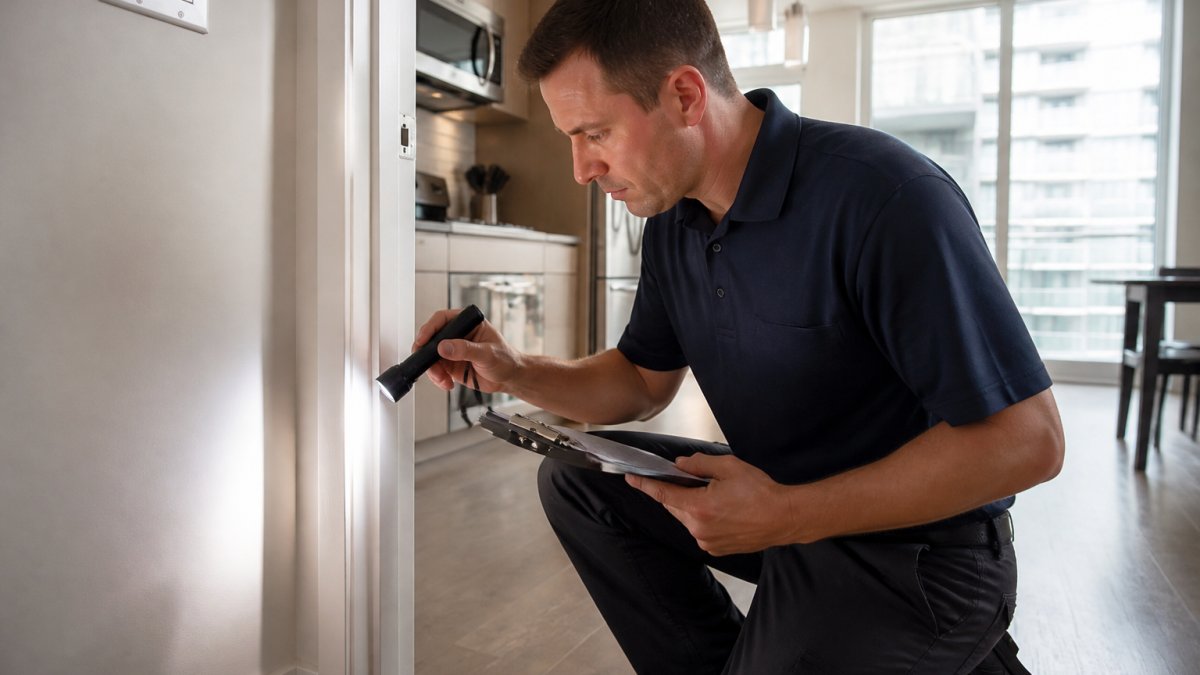
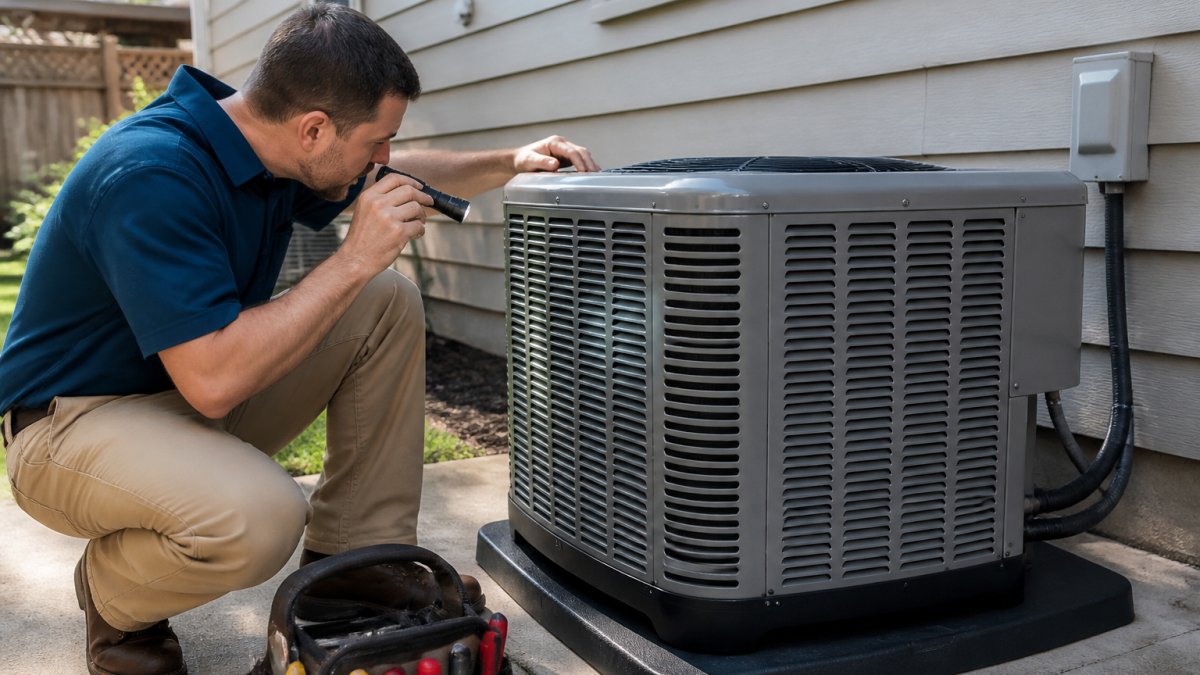
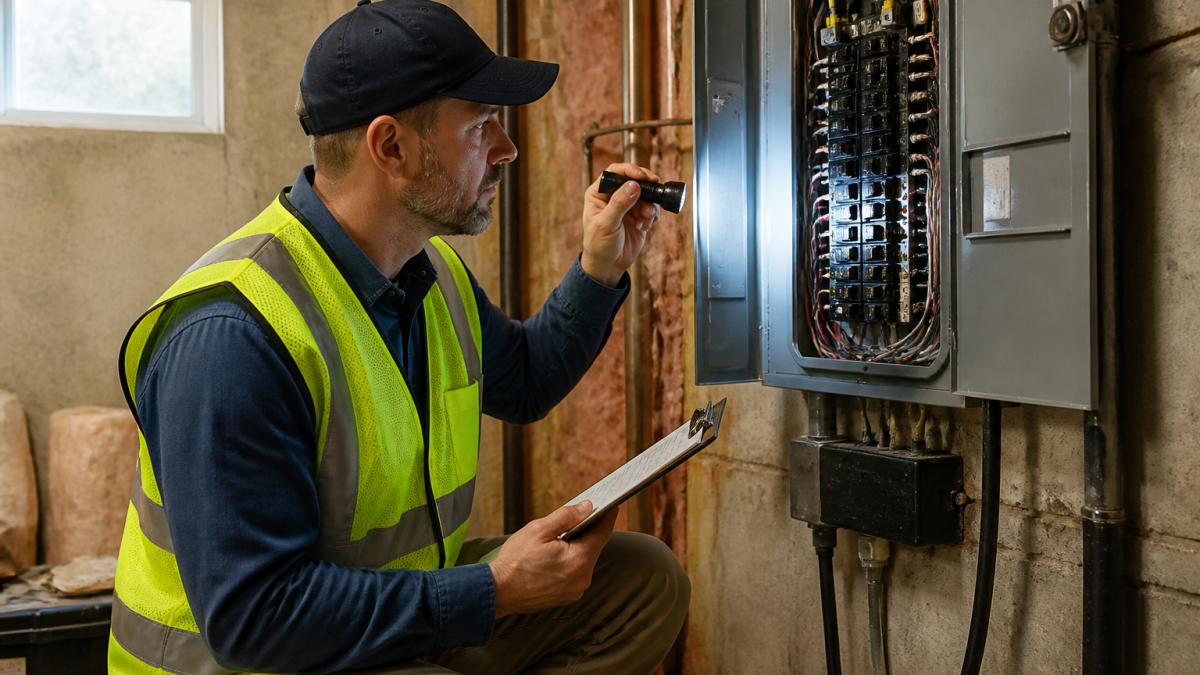
Inside the home, inspectors work through rooms checking walls, ceilings, floors, windows, and doors for damage or movement. The electrical system is reviewed for panel condition, visible wiring, outlets, and safety hazards. Plumbing is checked for visible pipes, fixtures, water pressure, and leaks. Heating and cooling equipment is operated and described, including age and visible condition.
A common mistake buyers make is assuming "it works" means "it's fine." A furnace that fires today can still be at the end of its service life. The report should tell you what it is, how old it looks, and what to watch.
Your Home Inspection Checklist for Buyers
A home inspection checklist for buyers is a preparation tool, not a substitute for the inspector's report. Use it to organize your questions and to make sure nothing important gets skipped on inspection day.
- Confirm what's included and excluded in the inspection agreement before booking
- Ask whether the roof and attic will be accessed
- Confirm whether thermal imaging is included or an add-on
- Note any known issues from the seller's disclosure
- Prepare a list of specific concerns to raise with the inspector
- Plan to attend the last portion of the inspection if possible
- Confirm report delivery timing before your condition deadline
| Stage | What to Do | Why It Matters |
|---|---|---|
| Before booking | Review scope and exclusions | Avoids surprise gaps |
| Before inspection | List your concerns | Directs attention to specifics |
| During inspection | Ask questions on site | Clarifies what you're seeing |
| After report | Review severity ratings | Prioritizes next steps |
What Is Not Included in a Home Inspection
What is not included in a home inspection is just as important as what is. Standard inspections are visual and non-invasive, so anything concealed behind finishes, underground, or inside sealed equipment is generally outside the scope.
Common exclusions include:
- Concealed defects behind walls, floors, or ceilings
- Underground items such as septic systems, wells, and buried lines
- Cosmetic issues and decorating
- Code compliance and permit history
- Environmental testing for mold, asbestos, and radon
- Pest, rodent, and wildlife inspection
- Detached structures and outbuildings, unless agreed in writing
- Irrigation systems and air duct interiors
Watch out: assuming a standard inspection includes environmental testing is the most expensive misunderstanding we see. If mold, asbestos, or radon is a concern, it requires a separate specialist, and the inspection agreement should say so plainly.
How Long Does a Home Inspection Take?
A typical home inspection takes two to four hours, depending on the size, age, and condition of the property. A small condo unit may finish in under two hours; an older character home with a basement, attic, and detached garage can run longer.
The clock isn't the point. What matters is whether the inspector has enough time to examine every accessible system and write a report you can actually use. If your offer is already in and your condition deadline is tight, ask about report delivery timing before you book.
A Home Inspection Report Example: How to Read Severity and Recommendations
A home inspection report example is only useful if it teaches you to separate the urgent from the routine. Most reports organize findings into categories such as safety hazards, major defects, and maintenance items, often with photos and plain-language comments. The gap most guides leave is that they never show you what those categories look like in practice, so here is a walkthrough of how findings, limitations, and recommendations typically appear, and how to read each one.
The four parts of a typical finding
A well-written finding usually contains four elements, and reading them in order keeps you from overreacting to the wrong thing:
- Observation, what the inspector actually saw, stated as a fact. Example: "Active water staining observed on the attic roof sheathing near the north gable vent."
- Implication, why it matters. Example: "Staining is consistent with moisture intrusion; the source was not confirmed during a visual inspection."
- Recommendation, the next step, and who should take it. Example: "Recommend further evaluation by a qualified roofing contractor to identify and correct the moisture source."
- Limitation, what the inspector could not see or do. Example: "Attic access was restricted by stored items; the full sheathing surface was not visible."
When a report skips the limitation, treat that as a signal to ask questions. A finding without a stated limit is either unusually confident or incompletely documented.
Severity, urgency, and the language that signals each
Reports rarely use a single universal rating scale, but the wording usually falls into recognizable bands. Learn to read the verbs and qualifiers:
Book Your Inspection Online Now →
- Safety hazard / immediate attention, language like "exposed conductor," "no GFCI protection at the kitchen counter," "cracked heat exchanger," or "blocked combustion air." These are the findings that justify a specialist before your condition deadline, not after closing.
- Major defect / repair likely required, language like "deteriorated roof covering at end of service life," "active seepage at the foundation wall," or "failed seal at the window flashing." These affect value and insurability and usually belong in your negotiation.
- Maintenance item / monitor, language like "caulking deteriorated at the tub surround," "downspout discharges against the foundation," or "tree limbs within two metres of the roof." These are planned upkeep, not deal-breakers.
- Informational / for your awareness, language like "furnace manufactured in 2009; typical service life is 15 to 20 years." No action today, but it belongs in your budget.
How photos, limitations, and life-expectancy notes fit together
Photos in a report are evidence, not decoration. A good photo shows the defect in context, the stain on the sheathing, the double-tapped breaker, the gap at the flashing, so you can see what the inspector saw. If a photo is tightly cropped and you cannot tell where it was taken, ask for the wider shot.
Life-expectancy notes are where reports earn their keep. A furnace that fires today can still be at the end of its service life, and a report that says "manufactured 2009, typical service life 15 to 20 years" is telling you to budget, not to panic. Roof coverings, water heaters, and air conditioners usually carry the same kind of note.
Limitations are the part buyers skip and later regret. Standard inspections are visual and non-invasive, so the report should state plainly what was not accessible, attic storage blocking the sheathing, a crawl space too shallow to enter, a panel cover that could not be removed safely. Those limits are not failures of the inspection; they are the boundaries of a visual, non-invasive scope, and they tell you where a specialist may be needed.
What to do with the report before your condition deadline
Work through the report in this order:
- Read the summary first, then the full findings, summaries compress, and compression hides nuance.
- Sort findings into the four bands above.
- For every safety hazard and major defect, decide whether you need a specialist quote before your condition deadline, and ask the inspector which trade to call.
- For maintenance items, build a first-year budget rather than a negotiation list.
- Call the inspector with any finding you cannot place in a band. Any provider worth hiring will walk you through it.
If a report leaves you unable to tell a minor fix from a deal-breaker, that is a conversation to have before the deadline, not after. The best reports make the distinction obvious; the next best thing is knowing how to ask.
Optional and Specialist Inspections: When a Standard Inspection Is Not Enough
Optional and specialist inspections fill the gaps a standard inspection cannot reach. A standard inspection is visual and non-invasive; specialists go further with testing, disassembly, or licensed trade expertise. The useful question is not whether specialists exist, it is when each one is worth booking, and how to sequence it against your condition deadline. Here is decision guidance for the specialists buyers ask about most.
How to decide whether a specialist is warranted
Ask three questions before you book any specialist:
- Did the standard inspection flag it? A finding that recommends further evaluation is the clearest signal. The inspector is telling you the visual scope ran out.
- Is the property type or age a known risk? Older homes, acreage properties, and homes with a history of moisture or renovation carry predictable risks that justify a specialist even without a flag.
- Does the issue affect safety, insurability, or value? If yes, resolve it before your condition deadline rather than after closing.
The specialists buyers most often need
- Structural engineer, warranted when the inspection shows signs consistent with movement: stepped cracking in masonry, bowing foundation walls, or uneven floors. A visual inspection cannot confirm what is underground, so the engineer's job is diagnosis, not observation.
- Environmental specialist (mold, asbestos, radon), warranted when there is visible moisture, a musty odor, a history of water intrusion, or a home of an age where asbestos-containing materials are plausible. These are testing services, not visual reviews, and they are outside a standard inspection.
- Licensed HVAC technician, warranted when the inspection notes a furnace or air conditioner at or near end of service life, a cracked heat exchanger, or combustion concerns. The inspector operates and describes the equipment; the technician tests and certifies it.
- Licensed electrician, warranted when the panel shows double-tapped breakers, aluminum branch wiring, or evidence of unpermitted work. Electrical findings are among the most common reasons a specialist is recommended.
- Septic and well specialists, warranted on acreage and rural properties, where these systems are underground and outside the visual scope. A standard inspection cannot assess them, and a failed septic system is a major cost.
- Pest and wood-destroying organism inspector, warranted where there is evidence of activity, prior treatment, or a property type with elevated risk. Pest inspection is not part of a standard visual inspection.
- Sewer scope, warranted on older homes where the lateral line may be clay, cast iron, or root-invaded. A camera inspection is the only way to see inside the line.
How specialists interact with your condition deadline
Specialist inspections take time to book and report, and your condition deadline does not move. Sequence them like this:
- Book the standard inspection first, as early in the condition period as possible.
- Ask the inspector, on site or in the report, which specialists the findings warrant.
- Book the highest-priority specialist first, safety and structural concerns before cosmetic ones.
- Build the specialist quotes into your negotiation before the deadline, not after.
A lower standard-inspection quote that excludes the roof, attic, or thermal imaging is not a better deal; it is a shorter inspection, and it may leave you booking specialists you could have flagged earlier. Ask for a written quote that states exactly what is included and what is not, and confirm report delivery timing before you book.
Condo and acreage variations
Condo buyers face a particular gap, because a standard inspection covers the unit's interior but not the building's common areas or reserve fund planning. If you're buying a condo, it's worth understanding how condo inspections differ before you book. Acreage buyers face the opposite gap: wells, septic systems, and outbuildings are often outside the standard scope and require their own specialists, so budget for them alongside the standard inspection rather than assuming they are covered.
How Climate and Property Type Change What Gets Inspected
Climate and property type change the emphasis of an inspection, even when the checklist looks the same. In a northern climate with long winters, attic ventilation, ice damming risk, exterior grading, and drainage are common areas of attention because freeze-thaw cycles stress the envelope. Conversely, arid environments present their own unique set of common inspection issues that require a shift in focus toward foundation stability and the integrity of cooling systems.
Property type shifts the focus too. A newer build gets scrutiny on workmanship and finishing; an older home gets scrutiny on aging systems, foundation condition, and past renovations. Condos raise questions about shared systems and documentation. Acreage properties bring wells, septic systems, and outbuildings into the conversation, often requiring separate specialists.
The takeaway is straightforward: two homes with identical square footage can require very different inspection attention.
What Home Inspections Cost and How to Prepare for Inspection Day
Pricing depends on the size, age, and type of property, plus any add-on services you request. Ask for a written quote that states exactly what's included and what isn't. Visit our website for current pricing or to request a quote.
Preparation for inspection day is simple:
- Clear access to the electrical panel, furnace, and water heater
- Make sure attic and crawl space hatches are accessible
- Note any areas of concern in advance
- Confirm whether you can attend
- Have your condition deadline dates ready
If you're selling, a pre-listing inspection works the same way and gives you time to address findings before buyers start negotiating. Either way, the goal is the same: fewer surprises at the worst possible moment.
Buying a home in a competitive market means decisions get made fast, and the inspection is often the only chance to see what you're actually buying. Executive Home Inspections delivers same-day, plain-English reports with photos and recommendations, backed by thermal imaging and more than 18 years of experience with Edmonton-area homes, condos, and older properties. Get started with Executive Home Inspections and book your inspection online now.
Frequently Asked Questions
What are the four main types of home inspection?
The four common categories are a standard residential inspection (structure, roof, electrical, plumbing, HVAC), a condo inspection focused on the unit interior and accessible common elements, a pre-listing inspection ordered by the seller, and specialist inspections such as sewer scope, mold, or structural engineering. A standard home inspection is visual and non-invasive; specialist reports go deeper on one system. Most buyers start with the standard inspection and add specialists only where the report flags a concern.
What is the biggest red flag in a home inspection?
Foundation movement and water intrusion are the two findings that most often change a deal. Cracks wider than a hairline, bowing basement walls, or evidence of repeated moisture in the attic or crawl space point to repairs that can run well beyond cosmetic. Electrical issues such as aluminum wiring or double-tapped breakers also rank high because they carry safety risk. A good inspector separates these urgent defects from normal wear so you know which findings actually matter.
Should buyers attend the home inspection?
Yes. Attending lets you see the defects firsthand and ask questions as they come up, which is far more useful than reading a report cold. Plan to arrive for the last hour or so if the full walkthrough is too long. Ask the inspector to point out shut-off valves, the electrical panel, and any maintenance items. Buyers who attend typically leave with a clearer sense of severity and a shortlist of what to fix first.
How long does a home inspection take for an older home?
A typical single-family home takes two to three hours, but a 1970s bungalow with original systems often runs longer because the inspector spends more time on the foundation, wiring, and plumbing. Condos usually take one to two hours. Same-day reporting shortens the wait after the walkthrough. If you are in a competitive offer situation, confirm the inspector's turnaround before booking so the report arrives inside your condition period.
Does a home inspection cover the septic system or well?
A standard home inspection does not test a septic system or well. The inspector will note visible signs such as the tank location, soggy ground, or an aging well head, but a proper septic evaluation requires pumping and camera work by a licensed specialist. If the property is rural or on a private well, order those specialist inspections as separate conditions. Skipping them can leave you responsible for a replacement that costs far more than the inspection itself.
Can a home inspection report help a seller?
A pre-listing inspection gives sellers the same information a buyer's inspector will find, so you can fix urgent items or disclose them upfront instead of negotiating under pressure. The report also helps you price realistically and avoid surprises during the buyer's condition period. Many sellers use the findings to get quotes from trades before listing. It is one of the few steps that can shorten a sale and reduce the chance of a deal collapsing late.