 how-to
Thermal Imaging for Home Inspections: A Step-by-Step Guide
Last Updated: November 1, 2026
Quick Summary
Thermal imaging for home inspections is a non-contact diagnostic method that uses an infrared camera to read surface temperatures and reveal problems the eye cannot see, such as hidden moisture, missing insulation, and loose wiring. The camera shows surface temperature only, so it points to areas that need further investigation rather than confirming a defect on its own.
- A steady indoor-outdoor temperature gap of roughly 10 to 15 degrees Celsius is ideal for a thermal scan.
- Keep windows and doors closed and turn off ceiling fans during the scan to keep air movement low.
- Avoid running a hot shower or cranking the heat right before the inspector arrives, as it creates false hot spots.
- Exterior scans are more reliable on an overcast day or after the sun has moved off the surface.
- At Executive Home Inspections, thermal imaging is included in every inspection, with same-day reports in plain English.
Table of Contents
- Thermal Imaging for Home Inspections: How the Scan Works
- Thermal Imaging for Water Leaks and Hidden Moisture
- Thermal Imaging for Insulation Problems and Heat Loss
- Choosing a Thermal Camera for Home Inspection Work
- Preparing for a Thermal Imaging Inspection
- Booking a Thermal Imaging Home Inspection
- Frequently Asked Questions
Thermal Imaging for Home Inspections: How the Scan Works
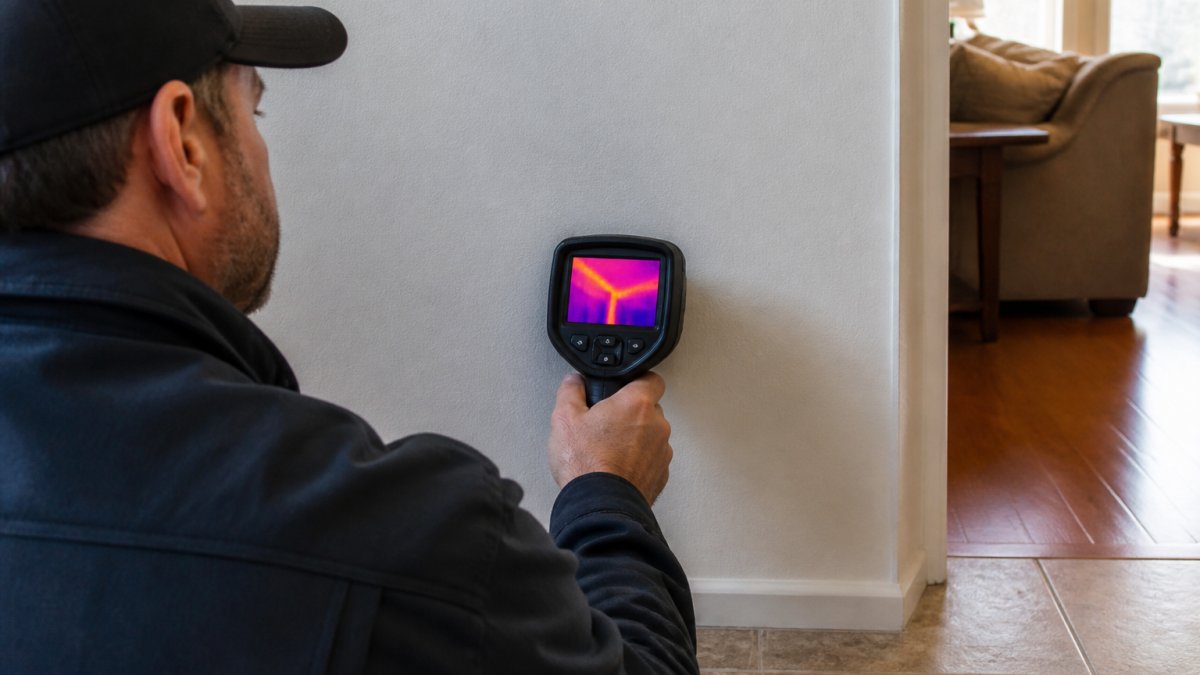
Thermal imaging for home inspections is a non-contact diagnostic method that uses an infrared camera to read surface temperatures and reveal problems the eye cannot see.
Here is the simple version. Every object gives off infrared energy. An infrared camera converts that energy into a picture called a thermogram.
Water, missing insulation, and loose wiring all change how heat moves through a building. That change shows up on screen as a temperature difference.
What a Thermal Camera Actually Shows
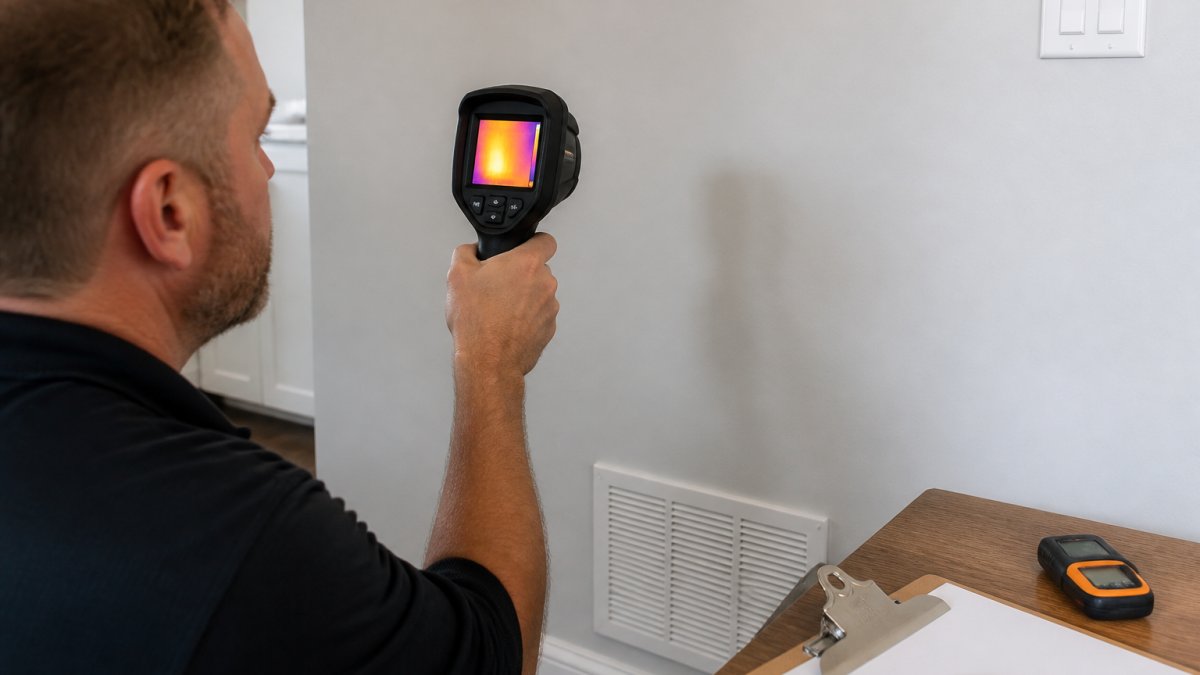
A thermal camera shows surface temperature, nothing more. It does not see through walls. It reads the heat on the surface and reveals patterns.
- A cool patch on a ceiling often means trapped moisture
- A bright band along a wall joint points to an air leak
- A hot spot at an outlet can signal a loose connection
The camera is a pointer, not a verdict. It tells us where to investigate.
What Thermal Imaging Cannot Detect
Thermal imaging cannot see inside a sealed wall, and it cannot confirm what a temperature pattern means on its own. It misses structural cracks, termite damage, and hidden rot that give off no heat difference. It also struggles when indoor and outdoor temperatures are close together.
The camera helps identify areas to examine. Other tools help confirm what is found.
Thermal Imaging for Water Leaks and Hidden Moisture
Water shows up clearly on a thermogram because wet materials hold heat differently than dry ones. As moisture evaporates, the surface cools, leaving a distinct dark shape.
Common finds include:
- Slow leaks under sinks and around toilets
- Roof and ceiling stains after heavy rain
- Moisture buildup behind tile and in basement corners
- Water intrusion at window frames and exterior doors
The camera can narrow the search to a specific area for further examination. Watch out: a cool patch is not always water. A missing bathtub or a drafty corner can look the same, so confirmation matters.
Thermal Imaging for Insulation Problems and Heat Loss
Missing insulation and air leaks are the two most common energy problems we find, and both leave a clear heat signature. Thermal imaging for insulation problems shows gaps as cool bands in winter and warm bands in summer. Heat loss at the building envelope often traces back to a few repeat offenders:
- Unfilled wall cavities around outlets and switches
- Gaps at rim joists and attic hatches
- Poorly seated insulation batts
- Drafts around windows and exterior doors
Fixing these improves energy efficiency and comfort. It also cuts drafts that make a room feel colder than the thermostat says.
Choosing a Thermal Camera for Home Inspection Work
A thermal camera for home inspection work needs decent resolution and a good temperature range. Entry-level cameras can spot a big moisture stain but miss a small air leak. Higher resolution gives sharper images and better accuracy.
What matters most:
Book Your Inspection Online Now →
- Detector resolution high enough to show fine detail
- Thermal sensitivity that catches small temperature differences
- A screen you can read in bright daylight
- Image storage for report photos
Preparing for a Thermal Imaging Inspection
Preparing for a thermal imaging inspection is mostly about temperature, but the conditions around the scan matter as much as the thermostat setting. The camera needs a meaningful difference between inside and outside air to work well.
A short checklist helps:
- Keep windows and doors closed during the scan
- Turn off ceiling fans and keep air movement low
- Clear access to walls, ceilings, and the electrical panel
- Move furniture away from exterior walls where possible
- Note any recent leaks, renovations, or damp spots
Do not run a hot shower or crank the heat right before we arrive. That creates false hot spots and muddies the reading.
Environmental Conditions That Affect the Scan
A thermogram is only as useful as the conditions behind it. Several factors can wash out the temperature patterns an inspector is looking for:
- Indoor-outdoor temperature difference. A wide gap makes insulation gaps, air leaks, and moisture show up clearly. When indoor and outdoor temperatures are close, the surface patterns flatten and small defects disappear into the noise.
- Sunlight and solar gain. Exterior walls that have been in direct sun hold heat for hours. Scanning a sunlit wall can produce a warm band that looks like a defect but is simply stored solar energy. Exterior scans are usually more reliable on an overcast day or after the sun has moved off the surface.
- Wind. Strong wind increases convective heat loss on exterior surfaces and can create cool patches that mimic moisture or missing insulation. Calm conditions give a cleaner read.
- Rain and recent precipitation. Wet cladding and roofing change surface temperatures and can mask or imitate water intrusion. A dry period before the scan is preferable.
- HVAC operation. Steady heating or cooling pressurizes the house and drives temperature differences across the envelope. Cycling systems, open windows, and exhaust fans running during the scan introduce drafts that confuse the picture.
Homeowner Preparation
The homeowner's job is simple: keep the house in its normal operating state and remove obstacles. Run the heating or cooling as you normally would, keep windows and doors closed for a few hours before the appointment, and avoid activities that add heat or moisture right before the inspector arrives.
Good preparation does not guarantee a finding, but poor preparation guarantees a weaker scan. The goal is a steady, quiet house with a clear temperature difference so the camera has something real to read.
The article lays out the conditions and preparation steps that make a thermal scan readable.
| Item | Value | Note |
|---|---|---|
| Ideal indoor-outdoor temperature gap | Roughly 10 to 15 degrees Celsius | Run normal heating or cooling for a few hours before the scan |
| Windows and doors | Closed during the scan | Keeps air movement low |
| Ceiling fans | Turned off | Keep air movement low |
| Access | Clear walls, ceilings, and electrical panel | Move furniture away from exterior walls where possible |
| Recent leaks, renovations, damp spots | Note them | Context helps the inspector interpret the camera |
| Hot shower or cranking the heat | Avoid right before arrival | Creates false hot spots |
| Sunlight and solar gain | Overcast day or after sun moves off | Sunlit walls hold heat for hours |
| Wind and rain | Calm and dry conditions preferred | Wet cladding can mask or imitate water intrusion |
Booking a Thermal Imaging Home Inspection
Booking a thermal imaging home inspection is the fastest way to see what a standard walk-through cannot.
Before you book, it helps to know what a standard inspection already covers.
At Executive Home Inspections, thermal imaging is included in every inspection. You get same-day reports in plain English, with photos and clear recommendations. Our Certified Master Inspector brings more than 18 years of experience.
Frequently Asked Questions
What does thermal imaging show during a home inspection?
A thermal camera reads surface temperature differences and turns them into a heat signature image called a thermogram. During a home inspection it highlights hidden moisture, insulation gaps, air leakage, electrical hot spots and temperature anomalies behind walls and ceilings. The scan does not see through materials; it shows where one area is warmer or cooler than it should be, which points the inspector to a likely defect worth confirming with a moisture meter or visual check.
Can a thermal camera detect water leaks behind walls?
Yes, thermal imaging for water leaks works because wet building materials hold and release heat differently from dry ones. A slow leak or moisture buildup usually appears as an irregular cool patch on the thermogram, especially after the home has been heated. Very small or intermittent leaks can stay hidden, so the scan is a screening tool rather than a guarantee.
How accurate is thermal imaging for home inspections?
Accuracy depends on conditions and interpretation. A camera with good thermal resolution, a trained inspector and a suitable temperature difference across the building envelope produce reliable readings. False positives are the main risk: a draft, a sun-warmed wall or a piece of furniture can mimic a defect. That is why a good inspector never reports a thermogram alone and always verifies with a moisture meter, a visual check or a second scan.
Does a thermal imaging scan replace a standard home inspection?
No. Thermal imaging is an added diagnostic tool, not a substitute for a full inspection. A standard walk-through covers the main systems and structure of the home. The thermal camera helps the inspector locate temperature anomalies that the eye cannot see, and the findings are folded into the same report. Buyers should expect both the visual inspection and the scan, not one instead of the other.
A hidden leak or a missing insulation gap can cost far more than the inspection that would have caught it. Executive Home Inspections pairs thermal imaging with a full visual review, same-day reports, and plain-English findings, so you know what matters before you commit. Get started with Executive Home Inspections and book your inspection online now.